Reducing operational friction across legacy systems while building the foundations of a hydrogen network to support France's energy transition
Role
Product Discovery, User Research, Information Architecture, Service Blueprint, Shadowing, Workshop Facilitation, Stakeholder Alignment
Client & Sector
GRTgaz
Energy, Infrastructure
Team
1 Lead Product Designer (my role)
1 UX Researcher, 1 Product Manager, Engineering Team
Duration
12 Months
Overview
The Context
At GRTgaz, France's main gas supplier, the legacy environment had evolved over years through departmental workarounds, resulting in fragmented workflows, incomplete operational records, and heavy reliance on phone calls and manual coordination. The newly hydrogen initiative presented a different challenge: there were no existing systems, established workflows, or user behaviours to learn from. Success required balancing operational continuity, regulatory compliance, and long-term scalability while aligning multiple departments with competing priorities.
4
Departments brought together through shared service blueprints
18
Users interviewed across three previously siloed departments
4
Critical metrics identified and validated by stakeholders
The Challenges
I led the UX research for highly strategic internal products and information systems at GRTgaz, France's main gas supplier in two parallel transformation initiatives:
- Modernise a critical legacy monitoring system used across multiple operational departments.
- Establish the foundations for entirely new information systems supporting France’s emerging hydrogen infrastructure.
The challenges required balancing immediate operational needs with long-term strategic vision: breaking down departmental silos by addressing critical operational pain points, and navigating organisational complexity while building new information systems.
First challenge:
Breaking Down Departmental Silos
The real system behind the system.
The biggest challenge wasn't the software itself. It was the disconnect between how departments believed work happened and how it actually happened.
To uncover these gaps, I conducted:
- 18 stakeholder and user interviews
- 5 focus group sessions
- Field observation with operational and proxy agents
- 3 departments' workflow analysis
approach & Solutions:
Reducing Friction In The Intervention Lifecycle
Data quality was a workflow problem.
Departments consistently reported incomplete intervention records. Initially, stakeholders viewed this as a training issue. When I conducted field research, I observed that users were navigating fragmented workflows that required entering information multiple times across disconnected systems. To keep operations moving, teams created informal workarounds and often postponed documentation until later. As a result:
- Intervention records were frequently incomplete
- Traceability suffered
- Teams relied on phone calls to verify information
- Operational risk increased
Redesigning the end-to-end intervention lifecycle.
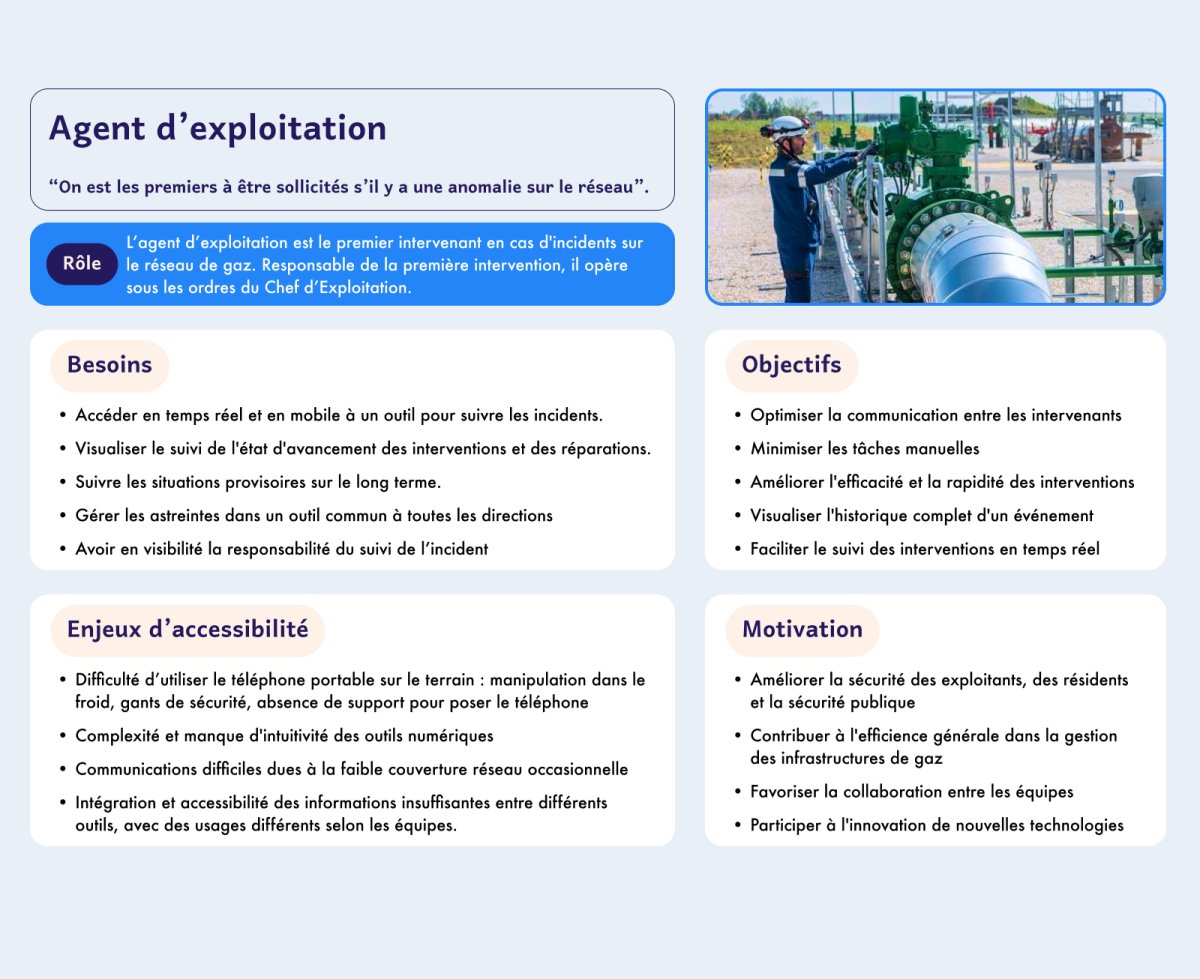
The design decision I made was to introduce the new workflow:
- Shared operational terminology across departments
- Standardised intervention statuses
- Context-aware data entry
- Improved visibility of intervention ownership
- Centralised intervention tracking
A key design principle was reducing cognitive load while improving data quality. Instead of presenting users with lengthy forms upfront, information was progressively disclosed based on context and task stage. This reduced friction for field operators while ensuring critical information was captured at the appropriate moment.
(Images are subject to NDA and are available upon request.)
The Problems
How might we design a monitoring system that encourages complete data entry without adding friction to field agents' workflows?
How might we design interfaces that reduce the times operators need to resolve incidents while maintaining safety compliance?
How might we create a unified tool for intervention traceability and status information s
approach & Solutions:
Breaking Down Departmental Silos
Calls compensated system inefficiencies.
Teams spent significant time calling other departments to verify intervention status. The root problem was a lack of shared operational awareness.
Surfacing a shared monitoring experience.
Rather than relying on manual updates and phone calls, teams could access the information directly within the system. This became one of the primary drivers behind reduced operational coordination effort. Working closely with operational stakeholders and engineers, I designed a shared operational visibility that provided:
Completeness
Improving the completeness of entered information by different departments
Timing
Reducing time to resolve infrastructures malfunctions
Traceability
Ensuring traceability of all interventions including temporary situations
Efficiency
Decreasing the volume of calls between the Regional Monitoring Center and field operators
approach & Solutions:
Aligning Stakeholders Around A Shared Process
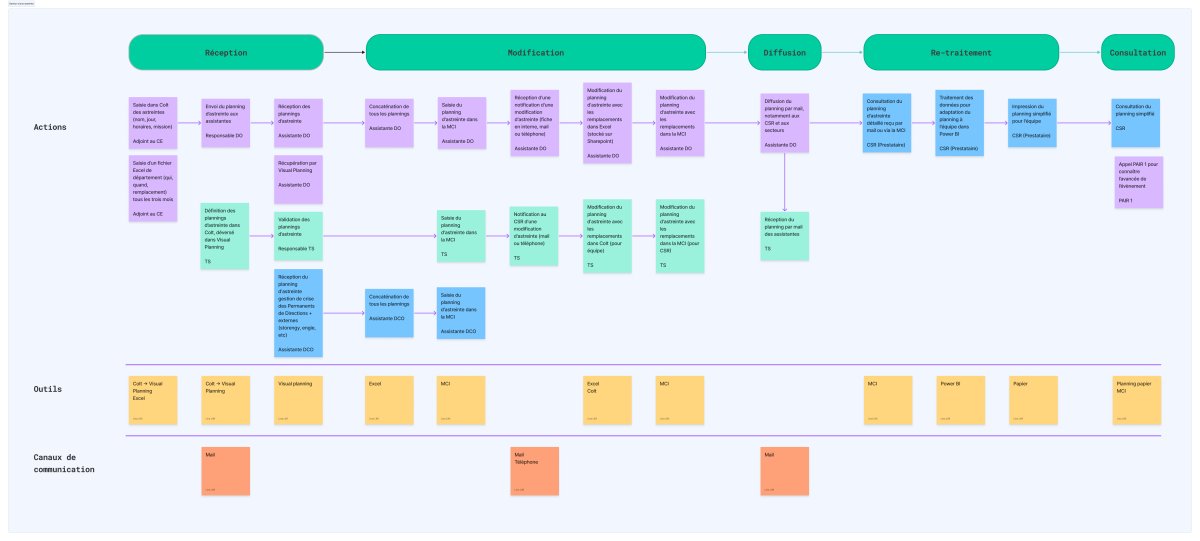
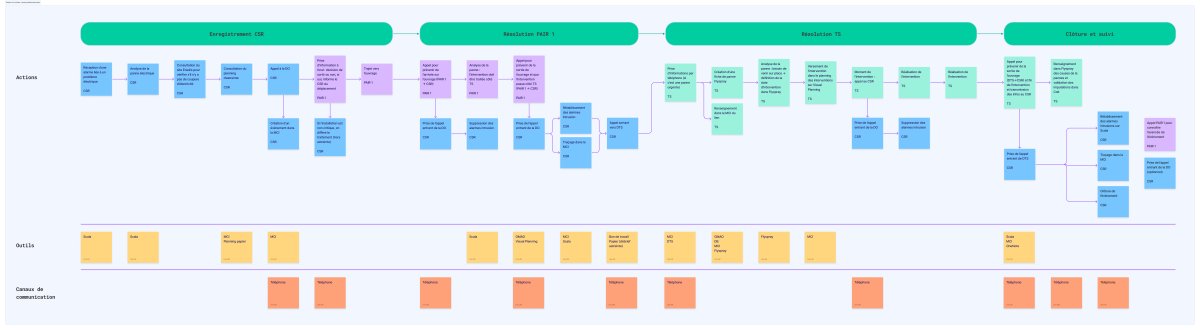
Beyond the product itself, I translated individual workflows into a service blueprint illustrating dependencies across departments. The blueprint exposed:
- Process bottlenecks
- Duplicate activities
- Information handoff failures
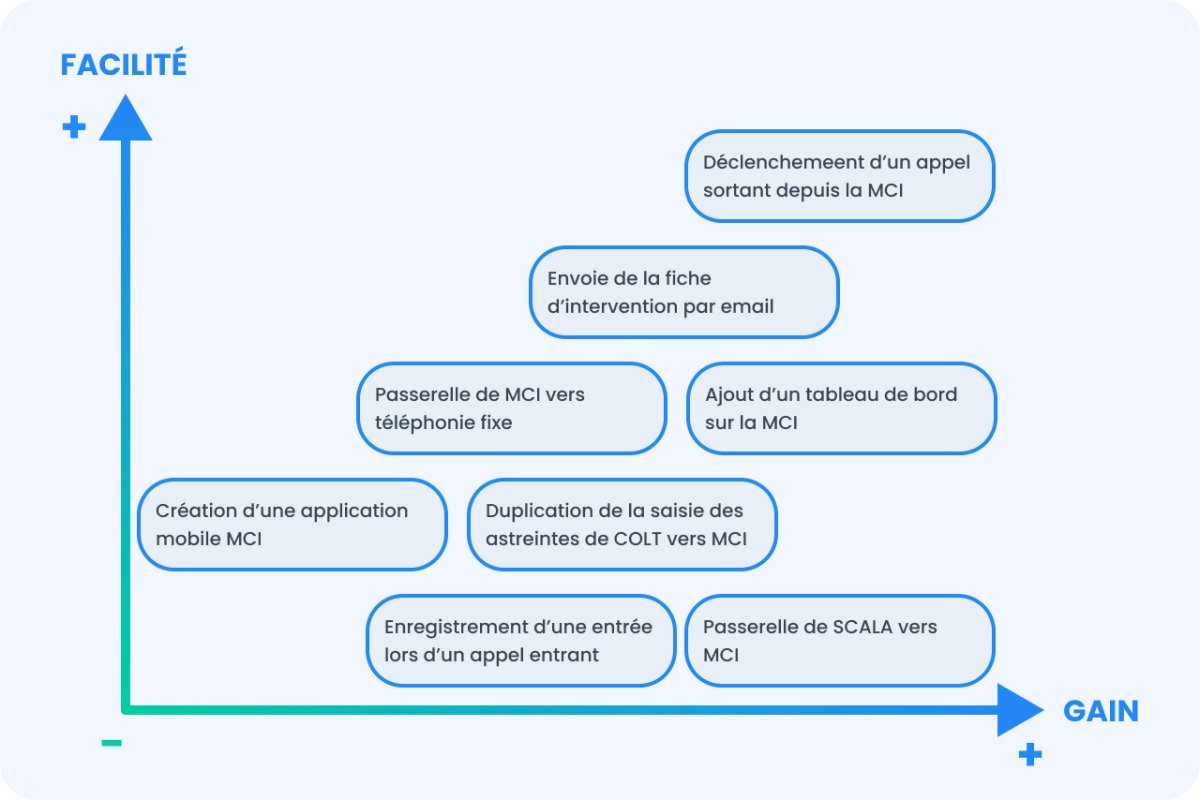
- Opportunities for automation
I conducted a kick-off workshop with stakeholders to converge diverse visions around shared success metrics. This alignment proved crucial for securing buy-in across departments that had previously worked independently. These key success criteria directly impacted service reliability and safety. The resulting framework directly influenced modernisation priorities and future roadmap decisions.
second challenge:
Greenfield Hydrogen Initiative
Alongside modernisation efforts, I worked on hydrogen infrastructure programs where there were no existing products, workflows, or user behaviours to observe. I helped establish the design foundations for future hydrogen information systems through:
- Facilitating UX maturity and product discovery workshops
- Creating functional ecosystem maps
- Defining future-state operational journeys
- Identifying information flows across emerging hydrogen operations
- Establishing a structured discovery-to-delivery process aligned with Lean Portfolio Management
(Images are subject to NDA and are available upon request.)
results
Operational Workflows Outcomes
The redesigned operational workflows delivered measurable business impact:
Organisational Alignment
- Established a shared operational model across three departments
- Secured executive support for future modernisation initiatives
- Accelerated stakeholder alignment and decision-making by an estimated two months
-27%
Reduced cross-department call volume thanks to operational efficiency
65 → 92%
Intervention record completion from better data quality
-35%
Intervention tracking errors, improving operational reliability